• Skip to primary navigation
  • Skip to main content
  • About Us
    • Board of Directors
    • National Advisors
    • Staff
  • Partners
    • Testimonials
  • Resilience Assessments
  • Initiatives
    • Current Initiatives
      • Expert’s Panel Webinar Addresses Risks Posed by Seriously Outdated Emergency Power Systems    
      • Power P.I.O.N.E.E.R.
      • Power Outage Partners
      • Patient P.I.O.N.E.E.R.
    • Past Initiatives
      • Power Resilience Blueprint for America
      • DHS Security & Resilience Challenge
      • Los Angeles County EMS Agency Initiative
  • Resources
    • ASSESS EMERGENCY POWER VULNERABILITIES
    • Reference Materials & Assessment Tools
  • News
  • Contact Us
Home » News

News

Hospitals Rely on Risky Old Power Generators

02.11.26

By John Tozzi, Bloomberg News

February 11, 2026

Hi, it’s John in New York. I was shocked by a recent report on aging hospital infrastructure, specifically generators that power life-saving equipment during an emergency.

In the dark

If the power goes out at a hospital, patients and doctors might be relying on backup generators that are 30, 40 or even 60 years old.

That’s the startling takeaway from a recent review of emergency power systems at hospitals in Los Angeles County. It’s likely a similar story in the rest of the country, says Eric Cote, project director at a small nonprofit called Powered for Patients, which did the survey on behalf of the county.

Cote has been working in disaster safety since after Hurricane Katrina, when power failures led to deaths at hospitals and nursing homes. The census of generators at hospitals in LA, done at the county’s request, found that one-third were more than 30 years old, which Cote says isconsidered their useful life. A handful were more than 60 years old. The outdated equipment was more prevalent at hospitals that had only one backup generator, Cote said, heightening the risk.

He likened the situation to a “a ticking time bomb,” and said public health officials and emergency managers are largely unaware of the danger.

Hospitals are required to test backup power systems monthly. But Cote said those tests may not replicate the real-world conditions they’ll face in an emergency.

How well a hospital responds to a power failure depends on more than just the age of the generator. Other components of the system and how it’s set up make a difference, too, along with how well-prepared staff are to use it. Newer systems can fail when people aren’t trained on the complexity of the technology, Cote said.

LA hospitals regularly test check backup systems for reliability, and “generator age alone is not an indicator of safety or readiness,” Adam Blackstone, a spokesperson for the Hospital Association of Southern California, said in an email. The medical centers coordinate with the county and can divert patients if needed. No rules force hospitals to replace generators just based on age, he said, “and upgrades involve significant planning and capital investment to ensure patient safety is not compromised.”

The cost to upgrade a hospital generator in California can range anywhere from $800,000 into the millions, said Salvatore Martorana, president of Global Power Group, which specializes in backup power systems. (The cost may be less in states with less stringent regulations and earthquake protection requirements.)

LA County offered funding to some hospitals relying on aging generators to set up systems to monitor their power supply. Cote said some have also upgraded infrastructure to allow for swift connections to portable generators that many cities can deploy quickly.

But Cote says the industry and regulators aren’t doing enough. There’s no central data on hospital generator failures, for one thing, making it hard to know the scope of the problem. He thinks they should be tracked and analyzed like airline crashes.

For hospitals, the expense of upgrading a generator competes with other priorities – paying for staff and supplies, expanding buildings or purchasing new diagnostic equipment. And unlike some other investments, a new generator doesn’t bring in more revenue.

“These facilities are essentially making gambles that outdated equipment will continue chugging along,” Cote said, “and we’ve seen plenty of examples where their calculations turn out to be wrong.” — John Tozzi

Discovery of Outdated Generators in LA County Hospitals Heightens Concern About Aging Hospital Generators Across the U.S.

12.10.25

Finding Prompts Proposed Changes to Federal Requirements Governing Emergency Power in Hospital and Nursing Homes

Powered for Patients (P4P), a 501c3 non-profit that helps jurisdictions identify and mitigate emergency power vulnerabilities in hospitals and nursing homes, is sounding the alarm about outdated hospital emergency power systems based on the discovery of seriously outdated generators in a number of Los Angeles County hospitals.

P4P conducted a census of the emergency power systems in 80 LA County hospitals as part of a multi-year emergency power resilience initiative launched by the Los Angeles County Emergency Medical Services (EMS) Agency. P4P was hired as the project consultant and P4P founder and project director, Eric Cote, conducted the census which captured data on 271 generators.

Overall, 87 generators or 32 percent of the total, were in excess of thirty years of age including 40 generators between 40 and 49 years of age, 9 between 50 and 59 years of age and 6 between 60 and 65 years of age. The percentage of generators in excess of 30 years of age among the 14 single generator hospitals included in the census was twice as high, at 64 percent. The useful life of a generator is considered 30 years of age[1].

The problem of outdated generators is not limited to hospitals. In 2023, a series of severe weather events prompted the U.S. Department of Health and Human Services (HHS), Office of the Inspector General, to conduct onsite inspections of emergency power systems in 154 nursing homes across eight states.  The audit found numerous facilities with generators more than 30 years old.

Current federal requirements do not limit the age of emergency power system components but mandate monthly testing for hospital and nursing home generators and every three years, generators must be operated for a four-hour period at various percentages of their rated capacity.  

P4P Convenes Expert’s Panel to Discuss Risks Posed by Outdated Emergency Power Equipment and Mitigation Solutions

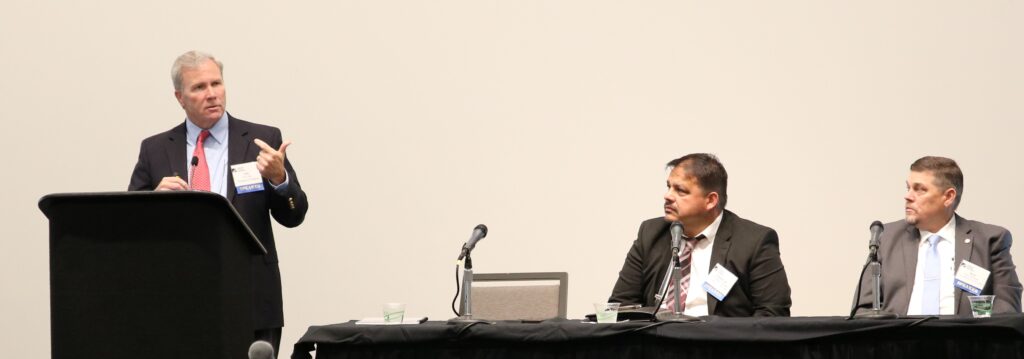
In response to its discovery of outdated generators in LA County, P4P teamed up with the California Society of Healthcare Engineering (CSHE) to convene an Expert’s Panel that took place on December 4, 2025.  Panelists discussed the LA County findings, the risks associated with outdated healthcare facility generators and potential mitigation strategies. Panelists included experts on federal and state generator performance and testing requirements for hospitals and nursing homes, hospital facility directors and generator service providers.

One panelist, Robert Solomon, P.E., currently serves as the Chief Development Officer in the Boston office for SOCOTEC, a global construction and infrastructure consulting firm. Solomon was previously a Director at the National Fire Protection Association (NFPA) and led the team at NFPA responsible for development of several of the fire protection and life safety codes referenced in the Centers for Medicare & Medicaid Services (CMS) Emergency Preparedness (EP) Rule.

The EP Rule establishes base standards for generator performance, inspection, testing and maintenance (ITM) in hospitals and nursing homes to protect patients, residents, staff and visitors during power outages. The EP Rule designates the 2012 edition of NFPA 99, Health Care Facilities Code and the 2010 edition of NFPA 110, Standard for Emergency and Standby Power Systems as its requirements for emergency power systems in hospitals and nursing homes, as well as other facilities governed by the EP Rule.

Given the discovery of aging generators in LA County, Solomon is suggesting that it may be time to consider different or enhanced testing of aging emergency power system components. “When CMS first published its proposed Emergency Preparedness Rule, generator age wasn’t a consideration, and at the time as well as now, neither NFPA 99 or NFPA 110 had any limits on the life span of the generator components,” said Solomon. “The inspection, testing and maintenance requirements embodied in NFPA 110 have been seen as the best way to safeguard against generator failures. In retrospect, given the discovery of older generators in LA County, generator component age is something that I believe should be evaluated for future code changes and state or federal regulation.”

The LA County findings have already spurred another proposed change to NFPA 110. During the August 2025 meeting of the NFPA 110 Technical Committee, a committee member, Skip Gregory, AIA, who was on the December 4th panel, reported on the discovery of outdated generators in LA County which prompted a proposed new annex section (Annex D) for the next edition of NFPA 110. The Annex language, as proposed, would, among other things, call attention to the need to provide additional scrutiny to older components of an emergency power supply system that may be approaching or even past their expected life cycle. 

Among the recommendations that emerged from the Expert’s Panel is requiring single generator hospitals to install quick connect devices that would allow a rapid connection of a temporary generator. Panelists also discussed requiring single generator hospitals to install commonly available monitoring equipment that would provide an automated, real-time alert to designated individuals anytime the generator experiences a problem while operating.

Without a second generator, patients in single generator hospitals face a higher risk of emergency evacuation if the facility’s only generator fails. The risk of generator failure is higher for facilities that fall behind on the routine maintenance recommended by generator manufacturers. Adding fault detection and diagnostic (FDD) equipment that provides real time alerts about a serious threat to emergency power would accelerate response by facility personnel and service providers. This early warning could also accelerate response by local government agencies, which could include readying evacuation assistance or deploying a temporary, portable generator.

LA County EMS Agency Response to Discovery of Outdated Generators Offers Blueprint for Other Jurisdictions

LA County EMS Agency officials were alarmed by the discovery of outdated generators and enlisted P4P’s help to develop a series of new, groundbreaking protocols to accelerate emergency power status reporting by hospitals during a power outage, and to help hospitals identify problems that may not be detected during routine generator testing. The EMS Agency also implemented the first confidential risk-rating of hospital emergency power systems initiated by a health agency. The risk rating makes it easier for EMS Agency officials to maintain closer vigilance during power outages of hospitals with outdated generators, limited onsite fuel storage capacity or only a single generator.

The EMS Agency also offered funding to its 14 single generator hospitals to deploy generator monitoring equipment as part of a pilot project. Two of the hospitals deployed the equipment and Powered for Patients monitored real time alerts for an 18-month period.

The new EMS Agency protocols were published in the Agency’s Healthcare Facility Emergency Power Resilience Playbook, a resource that can serve as a guide for other jurisdictions interested in boosting emergency power resilience for hospitals.

“The LA County EMS Agency should be applauded for initiating a thorough review of the emergency power systems in its hospitals and for moving swiftly to address the vulnerabilities we discovered,” said P4P’s Eric Cote. “It’s very likely that what we found in LA County reflects the state of emergency power in hospitals across California and the rest of the country. This represents a hidden danger that should be promptly addressed by emergency managers and public health officials.  At a minimum, jurisdictions should conduct a census of the emergency power systems in their facilities so they can identify facilities with significant risk factors.”

P4P has added a number of resources to its website to help jurisdictions assess and mitigate vulnerabilities, including a Good, Better, and Best Guide to Bolstering Emergency Power Resilience, an Emergency Power Resilience Resource Kit that includes many of the universally applicable elements of the LA County Playbook, and guidance on conducting a census of emergency power systems in hospitals and nursing homes.

Experts Attest to Challenges Posed by Outdated Equipment and Poorly Maintained Diesel Fuel

The December 4th Expert’s Panel included generator service providers who attested to the serious challenges hospitals and nursing homes face when relying on outdated equipment or when failing to properly treat tanks of diesel fuel to prevent bacterial growth that can hinder the operation of generators. 

Quinn Power Systems, the local Central and Southern California Caterpillar dealer, services a number of the hospital generators in LA County. Andrew Salem, Quinn Power Systems’ Product Support Sales Manager, took part in the panel discussion. “We take care of quite a few hospital generators, including some that are relatively new and others that are very old,” said Salem. “Among the biggest challenges for clients relying on outdated generators is finding parts in a timely fashion when repairs need to be made. We’ve seen situations where a client will have to wait for months for the factory to make a part that is no longer kept in stock. In these cases, our clients end up incurring huge rental costs that could have been invested in replacing outdated equipment.”

Brandon Morales, the service manager for Collicutt Energy Services, which services hospitals and nursing homes across California, underscored the importance of proper fuel maintenance. “We had a hospital client that hadn’t properly treated its diesel fuel tank which allowed bacteria to grow to the point where the generator wouldn’t start during a routine test,” said Morales. “The entire tank had to be emptied, and then properly cleaned and refueled. The client also faced the avoidable expense of having to replace fuel filters and fuel pumps.”

Sal Martorana, the founder and President of Global Power Group, and a panelist, said California’s stringent air quality standards and seismic requirements for emergency power systems in hospitals and nursing homes makes the cost of replacing outdated generators unaffordable for many facilities. “We work with clients all the time that want to update their emergency power system but simply cannot secure the funding from leadership they need,” said Martorana. “With hospital finances so tight, limited resources are going to investments that can generate revenue, like new MRI machines, instead of updating emergency power system components.”

Steve Works, a Caterpillar technical expert who works with Blanchard Energy, the CAT dealer in South Carolina, has studied hospital emergency power failures across the country for years. Works shared some of his findings with other panelists. “In my experience, an emergency power system that experiences problems in its first ten years of service often reflects flaws in the design, execution of the design, or commissioning of the design,” said Works. “Problems that don’t arise until a system is ten years old or older are usually caused by the failure to conduct proper predictive maintenance and updates of emergency power supply system components.”

Narsimha Irrinki, MS, PE, CHFM, CPE, the Enterprise Director of Facilities at Santa Clara Valley Healthcare, a four-hospital system based in San Jose, CA, took part in the Expert’s Panel. He said securing funding for emergency power modernization is very difficult, in part due to the added expense tied to California’s stringent environmental regulations of diesel generators. Irrinki discussed his growing use of fault detection and diagnostic equipment to stretch the capabilities of his engineering staff, which is smaller today than in previous years. “We recently installed monitors in many of the elevators in our four hospitals so we can now remotely see the operating status of these elevators during a power outage, said Irrinki “We’re looking to deploy this same technology to better monitor our HVAC system and our emergency power systems.”   

“Aging hospital infrastructure is a challenge facing virtually every hospital across the country, and so we applaud the LA County EMS Agency and Powered for Patients for their model work addressing emergency power vulnerabilities,” said Joe Brothman, the Director of General Services at UCI Medical Center, a 459-bed acute care hospital in Orange, CA. Brothman, who along with Irrinki, is a member of the CSHE Executive Committee, took part in the panel discussion. “It’s important that experts and policy makers continue to have conversations about the challenges hospitals face in safeguarding emergency power and whether the current regulatory framework adequately addresses the risks posed to patients from outdated emergency power systems.”


[1] Based on a recommendations included in Roadmap to Resiliency, a white paper on emergency power resilience authored by P4P Project Director Eric Cote and Jonathan Flannery of the American Society for Healthcare Engineering.

Journal of Business Continuity & Emergency Planning

07.09.25

Amid the Debate Over FEMA’s Future, Providing Temporary Generators to Impacted States is One Disaster Response Mission Best Led by the Federal Government

06.10.25

By Eric Cote, Founder and Project Director, Powered for Patients

From the early days of the current Trump administration, the future of FEMA has been in serious question. President Trump and Homeland Security Secretary Kristi Noem have talked about eliminating the agency. In January, when visiting Los Angeles County following the devastating wildfires, President Trump criticized FEMA’s recent performance in other disasters, saying, “I say, you don’t need FEMA, you need a good state government.”

In the ensuing months, thousands of FEMA employees have been terminated and major programs, such as the Building Resilient Infrastructure and Communities (BRIC) grant program, have been eliminated. In a Washington Post article published earlier this week, state and local emergency managers have made it clear that they’re no longer counting on FEMA to help their jurisdictions recover from disaster.

“We have heard him loud and clear,” said Alan Harris, the emergency manager for Seminole County, Florida, referring to the President’s comments.  The Washington Post reports that Harris is considering hiring more temporary staffers, solidifying mutual aid agreements with other governments and locking down contracts for vendors who can provide heavy equipment, temporary traffic signals and other post-storm necessities.

These are prudent moves amid the uncertainty but there are particular disaster response activities that are best led by the federal government, including the large-scale deployment of temporary generators to impacted states. Following a Presidential Emergency Declaration, the governors of impacted states can request deployment of temporary federal generators to restore power to facilities whose generators have failed, or to bring power to essential facilities without backup power, such as disaster shelters.

The federal fleet, comprised of generators owned by FEMA, and augmented by large privately owned rental fleets, is the largest in the nation. Large packs of generators of varying sizes, including some large enough to power hospitals, are pre-positioned around the country to accelerate deployment. This mission is carried out jointly by FEMA and the US Army Corps of Engineers (USACE), with assistance from the U.S. Army’s 249th Engineer Battalion and private contractors.

This federal fleet has been called upon many times following disasters that trigger prolonged power outages. In the massive federal response to Hurricane Maria, which ravaged Puerto Rico in 2017, even the vaunted federal fleet ran out of smaller generators needed to run health clinics and gas stations.

States have effectively supported each other in disaster responses for years, thanks to the Emergency Management Assistance Compact (EMAC), a national disaster–relief compact among the states and territories ratified by the U.S. Congress. But large-scale deployment of temporary generators is not something states could effectively manage, primarily because few states have the temporary power assets often needed during extended outages. Even if neighboring states were to combine their temporary emergency power assets, this collective resource would still pale in comparison to the federal fleet. Further, a large-scale regional disaster, such as a major hurricane, would likely deplete limited state temporary power assets, leaving few if any generators available for deployment to neighboring states.

There’s plenty of room to debate which federal agencies should lead the temporary power mission, but the Trump administration should make it clear that the large-scale deployment of temporary generators to hospitals, wastewater treatment plants, and other critical facilities impacted by prolonged power outages is a mission best led by the federal government.

Eric Cote is the Founder and Project Director of Powered for Patients (P4P), a 501c3 non-profit that works to safeguard backup power and expedite power restoration for critical healthcare facilities. P4P accomplishes its mission by facilitating increased collaboration between public health preparedness leaders, emergency managers, healthcare facility managers, and utilities.

Powered for Patients Welcomes Two New Board Members

04.15.25

Powered for Patients, a 501c3 non-profit that works to safeguard emergency power in critical healthcare facilities and boost power outage support for in-home life support users, announced today the appointment of two new members to its Board of Directors.

John Wilgis, MBA, RRT, the Vice President for Member and Business Relations for the Florida Hospital Association and Mary Casey Lockyer, MHS, BSN, RN, CCRN, the former Disaster Health Services Program Lead at the national headquarters of the American Red Cross, have both been appointed to the Board.

“I’m very excited to welcome John and Mary to our Board of Directors,” said Eric Cote, founder and project director for Powered for Patients (P4P). “They are both respected national leaders in disaster preparedness and response and their unique skillsets will help advance our important work on many fronts.”

“Given the number of deadly hurricanes Florida has experienced over the years, I’ve seen how much a disaster-impacted community depends on its hospitals to remain operational during power outages,” said Wilgis. “That’s why the work of Powered for Patients in developing and promoting best practices that safeguard emergency power is so critical and something I’m excited to support.”

During her tenure at the American Red Cross, Casey-Lockyer saw first-hand the serious challenges facing individuals who rely on electric-powered medical devices and sought refuge in disaster shelters. Many shelters were ill-equipped to provide the services and supports medical device users required.

“The work Powered for Patients is doing to boost power outage support for life support users living at home is truly groundbreaking,” said Casey-Lockyer. “I look forward to working with Eric and our other board members to support this work and help it realize its full potential.”

Power Outage Partners, a P4P initiative, seeks to provide life-saving power to individuals who rely on life support equipment at home, extending device run time so patients have more time to safely evacuate during power outages. In short duration outages, the need to evacuate may be averted. The latest Power Outage Partners initiative is being advanced in Texas, a state where recent natural disasters, including Winter Storm Uri in 2021 and Hurricane Beryl in 2024, created deadly challenges for individuals depending on electric powered medical devices.

The first Power Outage Partners initiative was launched as a pilot in Louisiana, a state that has also seen more than its share of natural disasters. Initial planning for the project was made possible with CDC funding and project management support from the Association of State and Territorial Health Officials (ASTHO).

ASTHO published a Toolkit in 2023 that chronicles the Louisiana project and details other strategies jurisdictions can use to boost power outage support for individuals relying on electric-powered medical devices in their homes. 

In welcoming its newest board members, Cote also thanked outgoing P4P board chair April Salas for her contributions over the years. “April’s senior-level experience at the Department of Energy supporting power outage planning with our nation’s governors and local officials gave her the perfect perspective to help support the mission of Powered for Patients as our Board Chair,” said Cote.

Mehdi Moutihar, a former professor of entrepreneurship at Johnson & Wales University, who currently serves as an organizational development consultant and executive coach, continues to serve on the P4P board.

Power Outage Partners Advances Texas Initiative

01.15.25

In January of this month, P4P project director Eric Cote traveled to Houston, TX to introduce the Texas Governor’s Committee on People with Disabilities (GCPD) to the Power Outage Partners initiative, a groundbreaking program Cote helped the Louisiana Department of Health launch as a pilot in 2021.

The pilot sought to provide invasively ventilated Louisianans living at home with funding to purchase additional battery capacity for ventilators and other life support equipment, allowing more time for safe evacuations. In short duration outages, the need for evacuation could be eliminated. 

In 2023, Ron Lucey, the executive director of the Texas Governor’s Committee on People with Disabilities (GCPD), heard Cote give a presentation on the Louisiana project and reached out to initiate discussions about a possible Texas project. Lucey’s interest was driven largely by Winter Storm Uri, which struck Texas in February 2021 and triggered prolonged and widespread power outages, resulting in the deaths of 248 Texans, including a Crosby, TX resident who depended on an oxygen concentrator.

The death of another oxygen-dependent Texan following Hurricane Beryl in July 2024 furthered Lucey’s interest in working with Cote. Since Cote’s presentation to the GCPD Board of Directors, he has been working with Lucey and other disability advocates in Texas to secure funding for an initiative.  Among the organizations Cote is working closely with is the TexMEP Association, a nonprofit that represents durable medical equipment (DME) suppliers in Texas. TexMEP has been working with Lucey since Winter Storm Uri to foster closer collaboration between DME suppliers and government agencies.

“We learned in Louisiana that DME suppliers have access to unique and highly valuable data about electricity-dependent individuals that government agencies had never sought to leverage,” said Cote. “We were able to bridge that gap thanks to help from several DME suppliers, who provided us with deidentified information about their customers, including  the number and type of devices being used, their frequency of use and their existing backup power resources. This information enabled us to determine how much additional battery capacity each customer would need to achieve 24 hours of runtime for their medical devices during a power outage. That was a real breakthrough that can help save lives in future disasters.”

Cote said the cooperation he received from DME suppliers in Louisiana has continued in Texas thanks to the TexMEP Association. “I’ve been working closely with Mark Gowen of Angell Medical Supply, one of the founders of the TexMEP Association, to develop an action plan in Texas that will leverage the untapped data DME suppliers have about their clients,” said Cote. “Success on this front will enable us to create a census of DME users in Texas, an unprecedented outcome that will greatly enhance the ability of local government agencies to prioritize power outage support for their most vulnerable electricity-dependent residents.”  

Death of Oxygen Dependent Individual Following Hurricane Beryl Underscores Severe Risk Facing Medical Device Users During Power Outages

08.01.24

On July 8, 2024, Hurricane Beryl slammed into the Texas coast, plunging Houston and surrounding communities into a prolonged power outage. Hurricane Beryl, the earliest Category 5 hurricane ever recorded in the Atlantic, left a path of destruction in its wake as it moved through the Caribbean Sea and into the United States. Despite being downgraded to a category 1 hurricane when it came ashore in Texas, Beryl caused 64 deaths in the U.S., and billions of dollars in infrastructure damage.

Among the deaths was Judith Greet, a 71-year-old from Crystal Beach, TX who was unable to keep her oxygen concentrator running during the power outage. “The tragic death of Judith Greet is a sad reminder of the deadly threats power outages pose to the thousands of individuals who depend on life support equipment in their homes,” said P4P project director Eric Cote.

Power Outage Partners, a P4P initiative that seeks to boost power outage support for life support users, will help minimize the power outage risk for America’s most vulnerable citizens. Power Outage Partners project director Eric Cote has been in touch with Texas officials to explore opportunities to launch an initiative in the Lone Star state.

In 2021, Winter Storm Uri proved deadly when prolonged power outages led to deaths of more than 200 Texans. Among the 246 Texans who dies was Carroll Anderson, a 75-year-old resident of Crosby, TX who relied on an oxygen concentrator. Anderson was found dead near his pickup truck where relatives believe he was searching for an oxygen tank.

Groundbreaking Louisiana Project Provides New Hope for Life Support Users During Power Outages

10.25.23

For the average person, power outages are inconvenient. For the growing number of people who depend on life support devices and other electric-powered medical equipment in their homes, even short-term outages can become a matter of life and death, especially when outages occur with little warning.

Absent a reliable source of backup power, many people who depend on life support and other types of durable medical equipment (DME) rely on hospital emergency departments or emergency shelters during an outage, simply seeking a place to plug in their device. For this reason, the CDC and the Association of State and Territorial Health Officials (ASTHO) provided funding and technical assistance to help launch Power Outage Partners, a groundbreaking Powered for Patients program piloted with the Louisiana Department of Health. 

The pilot sought to provide invasively ventilated Louisianans living at home with funding to enable them to purchase additional battery capacity for ventilators and other life support equipment, allowing more time for safe evacuations. In short duration outages, the need for evacuation may be eliminated. 

This groundbreaking program provides a roadmap that other jurisdictions can follow to boost their support for DME users during power outages. This roadmap is detailed in  Advanced Preparedness for Life Support Users During Power Outages, a Toolkit ASTHO published in August 2023. As the project director for the Louisiana pilot, ASTHO hired Eric Cote to author the Toolkit, which continues to serve as a resource for jurisdictions across the U.S. 

Powered for Patients Joins with LA County EMS Agency Officials in Introducing New Emergency Power Threat Reporting Protocols

10.05.23

Eric Cote, left, speaks at the California Hospital Association’s 2023 Emergency Preparedness Summit on October 5, 2023 where he and his LA County EMS Agency clients introduced the Healthcare Facility Emergency Power Resilience Playbook. With Cote are EMS Agency officials Chris Sandoval, Disaster Services Manager (center), and Terry Crammer, Chief, Disaster Services (right).

Eric Cote, left, speaks at the California Hospital Association’s 2023 Emergency Preparedness Summit on October 5, 2023 where he and his LA County EMS Agency clients introduced the Healthcare Facility Emergency Power Resilience Playbook. With Cote are EMS Agency officials Chris Sandoval, Disaster Services Manager (center), and Terry Crammer, Chief, Disaster Services (right).

Powered for Patients (P4P) Project Director Eric Cote recently joined LA County EMS Agency officials in a panel presentation at the California Hospital Association’s (CHA) Emergency Preparedness Conference in Sacramento, CA to introduce the new emergency power resilience protocols Cote helped the EMS Agency develop.

The new protocols were unveiled in the EMS Agency’s recently published Healthcare Facility Emergency Power Resilience Playbook which is the culmination of the comprehensive emergency power resilience initiative launched by the EMS Agency in May 2019. Cote authored the Playbook, a key deliverable in the multi-year initiative he led on behalf of P4P, which was hired as the project consultant by the EMS Agency.

Cote and his LA County EMS Agency clients, Disaster Services Chief Terry Crammer and Disaster Program Manager Chris Sandoval, introduced the Playbook and its new protocols at a panel discussion during the CHA conference. “The Playbook is a blueprint that can serve as a roadmap other jurisdictions can follow to bolster emergency power resilience in their hospitals,” said Cote, who is currently developing a toolkit other jurisdictions will be able to use as an instruction manual to guide their own efforts to create a variation of the LA County Playbook suitable for their jurisdiction’s hospital landscape.   

The annual CHA conference brings together hundreds of hospital emergency managers and public health officials to learn about new approaches and best practices in addressing the common challenges facing hospitals throughout California. Given the ongoing wildfire threat, the continuing use of Public Safety Power Shutoffs (PSPS) by California utilities and the ever present but remote possibility of a major earthquake, power outage preparedness remains a top priority for California’s emergency managers, public health officials and those operating the state’s 553 hospitals. 

Cote applauded the EMS Agency’s Crammer for his early interest in launching the emergency power resilience initiative. “Terry Crammer and I began discussing a potential initiative in 2017 and we continued those discussions over the next two years,” said Cote. “Given the growing threat of Public Safety Power Shutoffs, and the sizeable fleet of temporary generators owned collectively by LA County agencies and the cities of Long Beach and Los Angeles, Terry realized that LA County needed a plan to better safeguard emergency power and create protocols to effectively leverage the county’s significant temporary emergency power resources.”  

Los Angeles County EMS Agency Introduces Groundbreaking New Protocols Recommended by Powered for Patients to Safeguard Emergency Power

09.28.23

The Los Angeles County Emergency Medical Services (EMS) Agency has introduced groundbreaking new protocols to safeguard emergency power in hospitals following a Powered for Patients-led initiative that identified a number of vulnerabilities and recommended new measures to better protect patients during power outages.

The new protocols were introduced in the recently published Healthcare Facility Emergency Power Resilience Playbook, which is the culmination of the comprehensive emergency power resilience initiative launched by the EMS Agency in May 2019. The initiative was driven in part by the increasing use of Public Safety Power Shutoffs (PSPS) by Southern California Edison to reduce the risk of wildfires sparked by utility lines. Powered for Patients (P4P) was hired as the contractor to support the initiative.  P4P founder and project director Eric Cote led the initiative and authored the recently published Playbook which has been distributed to all hospitals in LA County and sub-acute skilled nursing facilities.

During the initial phases of the initiative, Cote evaluated state and county emergency response plans to assess how they addressed threats to emergency power during a power outage. He also conducted a preliminary assessment of emergency power systems among a representative sample of LA County hospitals and created an inventory of temporary emergency power assets owned by LA County agencies and the cities of Long Beach and Los Angeles that could be deployed to hospitals during an emergency.

Cote concluded his initial work with a series of recommendations to address the vulnerabilities he uncovered, including the absence of any protocol addressing emergency power threat reporting and response. To address this gap, Cote recommended creation of an emergency power threat reporting protocol to provide county officials with an early warning at the first sign of a serious threat to emergency power during an outage. This improved situational awareness would accelerate government and private sector response to a stricken facility.

After touring emergency power systems at eight hospitals in LA County, Cote got his first glimpse of the vulnerabilities of some emergency power systems, leading to his recommendation that a census of every hospital’s emergency power system be conducted during a later phase of the project. Cote also proposed creation of a first-of-its-kind confidential risk rating of hospital emergency power systems to help county officials maintain higher vigilance of hospitals with risk factors such as outdated generators, limited onsite fuel storage or lack of redundant emergency power. Paying closer attention to the emergency power status of these higher risk facilities during an outage would give county officials a head start in addressing any threats to emergency power before they might trigger an emergency evacuation.

Cote’s census of emergency power systems in 80 LA county hospitals captured data on 271 generators and confirmed his concerns about an aging generator fleet. More than 30% of the generators captured in the census were over 30 years of age, considered the useful life of a generator based on a 2017 white paper published by Powered for Patients and the American Society of Healthcare Engineering. Among the county’s 14 single generator hospitals, the problem of outdated generators was twice as bad, with 64% of these facilities relying on generators in excess of 30 years of age, with some generators older than 40, 50 and even 60 years of age, a finding that raised serious concerns with EMS Agency leaders and public health officials in Sacramento.

“The discovery of so many outdated generators helped make the case for taking the unprecedented step of creating a confidential, risk rating of hospital emergency power systems,” said Cote.  EMS Agency officials adopted a two-tier risk system, with higher risk facilities designated as Tier 2 facilities.  EMS Agency officials staffing the agency’s 24/7, 365 Medical Alert Center, which will monitor emergency power status in LA County hospitals, will have restricted access to the list of Tier 2 hospitals so they know which ones to watch more closely during an outage.    

The recently published Playbook introduces the risk tiers and a robust emergency power status reporting protocol that requires hospitals to report emergency power status through ReddiNet within 30 minutes of a power outage. ReddiNet is the online platform developed by the Hospital Association of Southern California (HASC) that is used by the LA County EMS Agency, and 21 other California counties, for two-way communications between county EMS officials and hospitals. ReddiNet enables EMS agencies to poll hospitals on their status and allows hospitals to post information about limitations they may face in accepting new patients or providing advanced life-saving services. ReddiNet developed a new emergency power status reporting dashboard to accommodate the new LA County EMS Agency protocol.

Over the past two months, training sessions and table-top exercises have been conducted for hospitals in Los Angeles County to introduce the Playbook and its new protocols.

  • Page 1
  • Page 2
  • Go to Next Page »

5600 Post Road, East Greenwich, RI 02818 | 401-374-8500

  • About Us
  • Partners
  • Resilience Assessments
  • Initiatives
  • Resources
  • News
  • Contact

©Copyright 2023 Powered for Patients